Lighting the Way, Gently: Rays Recognised for Protection of Centennial Beach Turtles
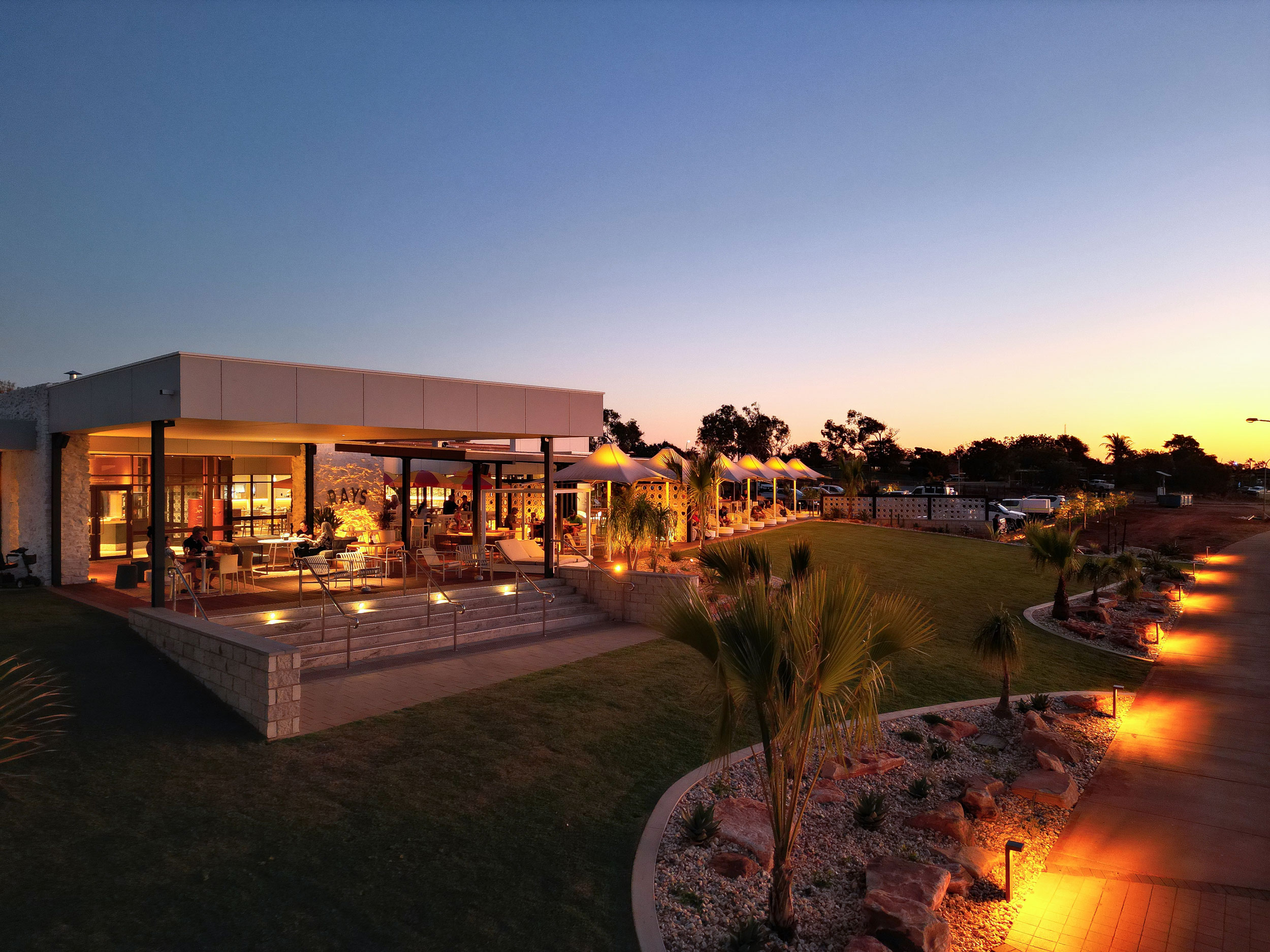
Rays at The Hedland Hotel has always been about the view: that wide-open sweep across Centennial Beach, where the sunset feels a little bigger and the night sky stretches on. So when our team set out to redevelop Rays, we knew the upgrade couldn’t stop at what guests see during the day. It had to include what happens after dark, too — especially for the turtles that call this beach home, returning to the coastline each year to nest.
That idea has now been recognised, with The Hedland Hotel named a recipient of a Western Australian IES (Illuminating Engineering Society) Lighting Design Award, acknowledging the project’s efforts to reduce light pollution and help protect Centennial Beach’s nesting turtles. The accolade is testament to our team’s collaboration with lighting specialist Martin Klaasen — whose experience spans more than 100 hotels worldwide, in landscapes of every kind.
The Pilbara may be a world away from many of his international projects, but as Martin puts it: “The fundamentals of great lighting always stay the same. Lighting should feel welcoming, practical and considered. Importantly, it should always respect the place it calls home.”
“Centennial Beach is a special place for areason. It’s a living part of the Hedland’s biodiversity, and during the redevelopment it became clear we needed to treat lighting as part of the environmental responsibility of the site, not simply a design finish,” said Martin.
To better understand the impact, Martin shared with us his experience on the beach, where he saw the turtles nesting first-hand. He shifted his perspective — literally — crouching down at turtle level to observe what the beachfront lighting looked and felt like from their point of view.
“What seemed subtle from standing height became harsh and bright from the ground. It reinforced a critical reality: turtles are guided by brightness. If there are strong artificial light sources nearby —particularly blue-toned light — they can become distracted or disoriented, making it harder to find their way back to the ocean.
“Sadly for sea turtle hatchlings, who are even more easily led off course, that distraction can have serious, even fatal, consequences. Over time, those losses can compound, creating broader biodiversity challenges as local turtle populations decline,” said Martin.
Understanding this, the strategy became clear: lighting throughout the new Rays needed to shift to warmer tones that sitoutside the turtles’ peak sensitivity. That’s why the redevelopment prioritised warm, amber lighting across all exterior areas.
Working with Martin and his team, a report was prepared for the Town of Port Hedland and the Department of Biodiversity, outlining these recommendations — including specifying all outdoor lighting as amber and ensuring light was directed away from the beach or down toward theground. In the car park, lighting was kept low and controlled, avoiding high street-style poles that could spill light toward the shoreline.
And while the award for this project focuses onthe exterior outcome, our team didn’t stop there. Interior lighting was also considered, including optics and visibility through windows, to help reduce unnecessary spill into the night.
At the helm of leading the redevelopment of Rays was our CEO, Garrett Prendiville.
“We’re incredibly proud to be recognised for this project. But, more importantly, we’re proud to be able to give back and help strengthen protection for the environments our venues call home. Alongside working with Martin’s team, we also worked extensively with Care For Hedland, a brilliant local not-for-profit and genuine custodians of the turtles in Hedland. Their extensive knowledge and guidance helped shape the lighting upgrade to ensure conservation of this precious species.
“As an organisation lucky to operate across some of Australia’s most beautiful spaces, from Samphire on Rottnest Island to Mangrove in Broome, we understand the responsibility that comes with preserving natural habitats so biodiversity can thrive,” said Garrett.
Rays is one of only a handful of Australian venues leading the way in reducing light pollution, proving that thoughtful design can elevate the guest experience while protecting the natural world beyond our walls. With global movements like the Dark Sky Association championing darker skies and smarter lighting in hospitality, it’s a direction we’re proud to be championing.
Continue Reading

Tigerfish’s Brendan Scott Grey On Hand-Rolled Oshibori, 3am Ramen & The Pursuit Of Perfection
The Art of Pairing: Executive Chef Alan Spagnolo on Food and Wine in Harmony at Sandalford
Destination WA Served Up La Dolce Vita on Rottnest

Urbanlist celebrates International Women's Day 2025

Welcoming The Leea Darwin

How to make pasta just like nonna!

Prendiville Group Celebrates Six Accolades at the 2025 WA Good Food Guide Awards

GO PINK with us this October to support Breast Cancer Care WA

Head Chef turned Event Manager, Belinda Gertig takes home an industry accolade

The local’s guide to Rottnest Island experiences
